HANGING ON THE FRIDGE














Traditional rewrites freeze features for months and gamble everything on a single cutover. Our Hybrid Migration Methodology runs both systems in parallel—validating every step in production with zero downtime. Battle-tested over 20+ years of complex migrations.
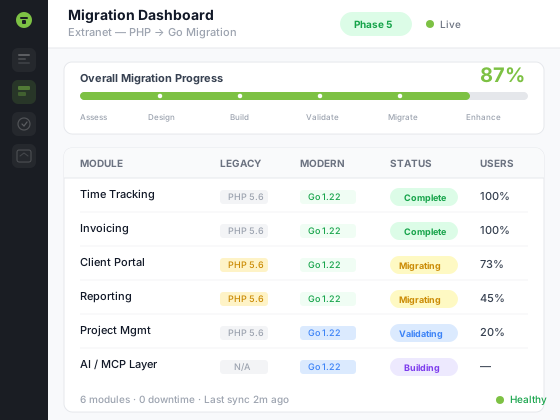
Run both systems in parallel. Validate everything. Cut over when you're confident.
Traditional rewrites demand months of frozen features and a high-stakes switchover. Our methodology keeps your business running the entire time—legacy and modern systems operate side by side on the same data, with every step reversible until you're ready.
Your business never stops. Both systems run simultaneously—users work uninterrupted while we validate the modern system in production
No point of no return. If anything doesn't look right, roll back instantly to the legacy system. The old system is always your safety net
Start small, validate results, then scale. Modernize 10% first, measure the ROI, then decide how to proceed. No all-or-nothing bets
Test in production, not in a lab. Every module is validated with real data and real workflows before any users are transitioned
Every record, every relationship, every year of history—migrated completely. Shared database means both systems always see the same data
The end result is a modern, maintainable system built for the next 20 years—with AI integration, APIs, and performance you can't get from legacy
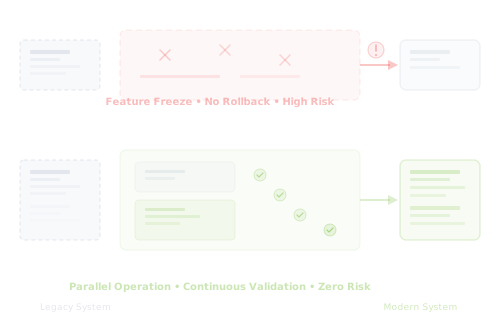
Traditional rewrites follow a dangerous pattern: freeze all features, build in isolation for 12-18 months, then attempt a high-stakes switchover. 66% of large IT projects fail or significantly overrun, with average cost overruns of 45%.
The risks are real: months of frozen features frustrating users, a single point of failure at cutover, no rollback plan when problems surface, and production issues discovered too late to fix easily.
Our hybrid approach inverts this. Both systems operate in parallel from the start. Features keep shipping. Every step is validated in production. And the old system is always there as a safety net.
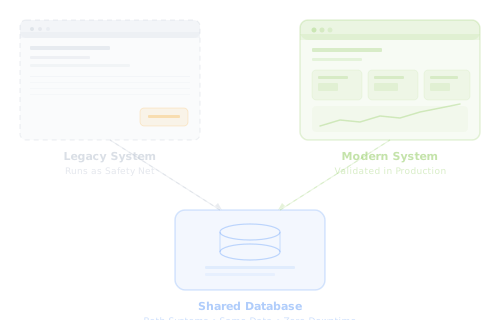
Both systems. Same database. Zero conflicts.
The key to safe migration is parallel operation. Your legacy system keeps running exactly as it does today while we build the modern replacement alongside it—both reading and writing to the same database.
Users can be transitioned gradually. Start with low-risk workflows, validate everything works, then progress to higher-risk areas. At any point, a user can switch back to the legacy system if something isn't right. The cutover happens when confidence is earned, not when a deadline forces it.
Understand your legacy system thoroughly. Document architecture, identify critical paths, map data relationships, and define success criteria for the migration.
Plan parallel architecture with backward compatibility. Design how both systems will coexist on the same database and create API contracts between them.
Implement the new system alongside legacy. Develop incrementally while both systems share data sources. Features keep shipping in the legacy system.
Prove parallel operation works in production. Test real workflows, validate data consistency, and build confidence through continuous validation.
Transition users gradually with maintained rollback capability. Start with low-risk workflows, progress to high-risk features. Old system stays as safety net.
Once migration is complete, implement the improvements that were impossible on legacy—AI integration, modern APIs, performance optimization, new capabilities.
The best modernization projects start with understanding your specific system, your constraints, and your goals. We've been applying this methodology since 1999.
Let's have a free, no-commitment conversation about your legacy system and how the Hybrid Migration Methodology could work for you. No sales pressure—just experienced developers who've done this dozens of times.

Our team is ready to handle projects of any size. Reach out to us with what you're looking for and we'll help prepare a project scope that fits your needs and budget.